New York’s leaves change later than most people expect. Upstate forests turn in late September and early October, but the city usually doesn’t hit its best color until late October, and the deepest color often arrives in the first part of November. Plenty of visitors arrive in mid-October to find Central Park still mostly green.
The good news is that you don’t have to leave the city to see it. All five boroughs have old forests, lakes and hilltop views, and most of the best spots are free. This guide covers when to go, where to look in each borough and how to plan a day around it. Locations and trail suggestions draw on NYC Parks’ own fall foliage recommendations.
When is peak fall foliage in NYC?
There’s no fixed date. Color depends on the weather, especially the temperature through October, and it varies from tree to tree and park to park. As a general rule:
- Early to mid-October: a few early trees turn, mostly in the northern parks and upper Manhattan. Most of the city is still green.
- Late October: color builds quickly. A good time for the Bronx, upper Manhattan and Staten Island’s woods.
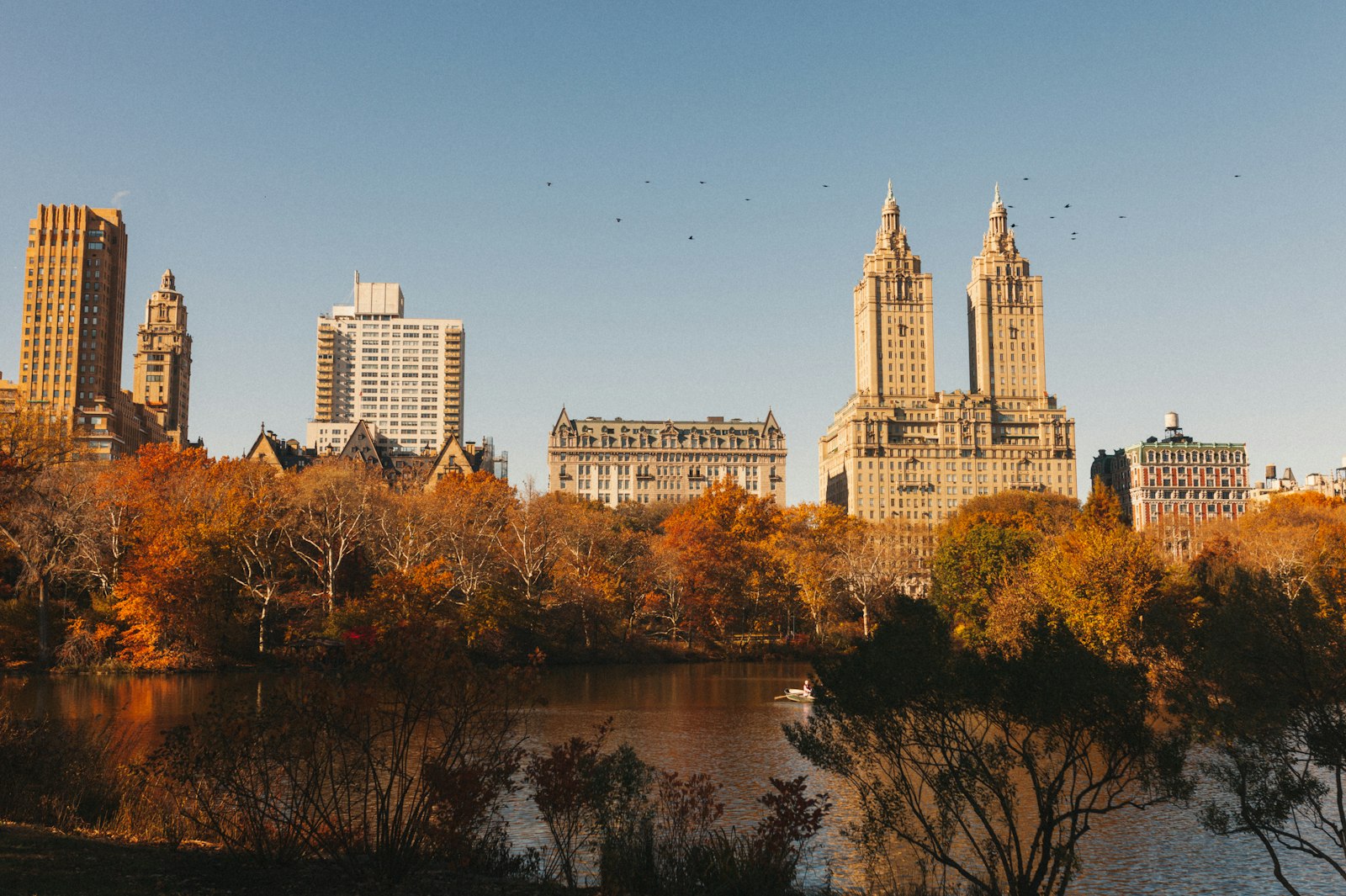
- Early November: often the best time in Central Park, Prospect Park and the rest of the city.
- Mid-November onward: oaks hold their brown and red leaves longest, but wind and rain strip a lot of color by now.
If you’re timing a trip, aim for the last week of October or the first two weeks of November and check conditions a few days before you go. New York State’s I Love NY tourism office publishes a weekly fall foliage report during the season, and it’s the easiest way to see how close each region is to peak.
Quick picks
- Most famous: Central Park, especially the Ramble and the North Woods.
- Most concentrated color: the New York Botanical Garden’s old-growth forest in the Bronx.
- Best view over the treetops: Lookout Hill in Prospect Park or Moses’ Mountain in the Staten Island Greenbelt.
- Best for a real hike: Van Cortlandt Park or the Staten Island Greenbelt.
- Quietest: Forest Park in Queens or Inwood Hill Park in Manhattan.
- Easiest with kids: Prospect Park’s Lullwater or Central Park around the Lake.
Manhattan
Central Park
Central Park is the obvious place to start, and it earns its reputation. NYC Parks points to two areas in particular. The Ramble, the wooded middle section between the Lake and 79th Street, is a maze of paths under elms, oaks and maples. Further north, the Ravine and the North Woods feel almost rural: the path along the Loch passes rustic bridges and small cascades, and the stone Glen Span Arch stands next to a waterfall where the Pool feeds into the Loch.
The Mall, the long walkway lined with American elms in the southern half of the park, is the best-known autumn view, but it’s also the most crowded. Go early on a weekday if you can.
Inwood Hill Park
At the top of Manhattan, Inwood Hill Park has some of the island’s last natural forest. NYC Parks suggests the blue trail, which starts near the Gaelic Field on the park’s north side and climbs to an overlook facing the Hudson River and the Palisades. Finish at Muscota Marsh, which looks out on the Henry Hudson Bridge. Take the A train to Inwood–207th Street.
Highbridge Park and the High Bridge
A trail runs along the ridge above the Harlem River Drive for the length of Highbridge Park, from 155th Street to Dyckman Street, past oaks, hickories and cherries. Don’t skip the High Bridge itself. It’s the oldest standing bridge in the city, closed to cars, and from the middle you get a view over the Harlem River and the treetops on both banks.
Fort Tryon Park
Just south of Inwood, Fort Tryon Park sits on a ridge above the Hudson, and its terraces look across the river at the Palisades cliffs in New Jersey. The Met Cloisters, the Metropolitan Museum’s medieval art branch, is inside the park, so you can combine a walk with a museum visit. Our museum guide explains how Met tickets work.
Brooklyn
Prospect Park
Prospect Park has the most varied trees of any park on this list, from Camperdown elms and ginkgos to tulip trees and beeches. NYC Parks recommends the Lullwater and the Peninsula, where trees ring the water, and the Ravine in the middle of the park, which holds Brooklyn’s last old-growth forest. Climb Lookout Hill, one of the highest points in Brooklyn, for a view over the treetops.
On Sundays until October 25, the Smorgasburg food market runs on Breeze Hill, near the Lincoln Road entrance, so you can eat in the park too.
Brooklyn Botanic Garden
Next door to Prospect Park, the Brooklyn Botanic Garden adds a Japanese garden, a rose garden and planted collections of trees and shrubs. In October it’s open Tuesday to Sunday from 10am to 6pm, and from November to December the hours shorten to 10am to 3:30pm. It’s closed on Mondays. Tickets are required and children under 12 get in free. Check the garden’s hours page for current details.
Green-Wood Cemetery
Green-Wood is a 19th-century cemetery laid out as a landscaped park, with hills, ponds and old trees. Entry is always free, and the main entrance is at Fifth Avenue and 25th Street. The cemetery runs free walking tours on some Sunday mornings. See our Brooklyn things to do guide for more.
Fort Greene Park and Owl’s Head Park
Fort Greene Park is small enough to see in an hour, and NYC Parks publishes a tree trail map for identifying what you’re looking at. Climb to the top of the hill for a city view. In Bay Ridge, Owl’s Head Park has oaks, maples and beeches on a hill overlooking New York Harbor.
The Bronx
New York Botanical Garden
The New York Botanical Garden covers 250 acres, and its 50-acre Thain Family Forest is a stretch of old-growth woodland. For concentrated color in one place, it’s hard to beat. The garden is open Tuesday to Sunday, 10am to 6pm. On Wednesdays, grounds admission is free all day for NYC residents and free for everyone else from 10 to 11am. Check the garden’s ticket page before you go, since fall events can change the schedule. Pair it with lunch on Arthur Avenue, which our Bronx guide covers.
Van Cortlandt Park
For an actual hike, NYC Parks recommends the John Muir Trail, a 2-mile route across Van Cortlandt Park that passes through three distinct forests: the Northeast Forest with red oaks, sweetgums and tulip trees, the Croton Woods with sugar maples and hickories, and the hilly Northwest Forest. Stop at Van Cortlandt Lake on the way.
Pelham Bay Park
The city’s largest park has the Kazimiroff Trail on Hunter Island, a nature sanctuary of tall oaks, spruces and pines. NYC Parks notes that one white oak on the Split Rock Golf Course is around 400 years old.
Bronx River Greenway
The greenway follows the Bronx River, the city’s only freshwater river, from the Westchester line to Soundview Park. Walk or cycle it to see the trees reflected in the water. The Bronx River Forest along the route is one of the oldest forests in the city.
Queens
Forest Park
Forest Park, near Kew Gardens and Woodhaven, contains the largest continuous oak forest in Queens, with some trees more than 150 years old. NYC Parks suggests the yellow, blue and orange trails. Look for the Pine Grove behind the basketball court at Myrtle Avenue and Park Lane South.
Alley Pond Park
Alley Pond Park has wooded trails and wetlands, and its Tulip Tree Trail passes the Alley Pond Giant, a tulip tree NYC Parks describes as the tallest and oldest tree in the city. For a lake view, head to Oakland Lake at 223rd Street and Cloverdale Boulevard.
Kissena Park
The Kissena Grove in Flushing was a 19th-century tree nursery, and many of its imported trees still stand. Look for katsura trees with golden heart-shaped leaves and a bald cypress, a conifer whose needles turn orange in the fall. Combine it with a food crawl in Flushing, which our Queens guide describes.
Staten Island
The Greenbelt
The Staten Island Greenbelt has around 35 miles of trails through one of the city’s least disturbed forests. Climb Moses’ Mountain, about 200 feet high, for a view across the canopy. It’s the closest thing to a mountain hike inside city limits.
Clove Lakes Park
Clove Lakes Park has easy paths past a chain of ponds and lakes. Look for a tulip tree in the park’s northwest section that NYC Parks says has lived there for at least 300 years and is the largest living thing in the borough.
Silver Lake Park and Blue Heron Park
Silver Lake Park has a paved loop around a lake ringed with maples and sweetgums. Blue Heron Park, on the south shore, has short trails around Spring Pond and Butterfly Pond. The free Staten Island Ferry gets you to the island. Our Staten Island guide explains how to get around once you’re there.
Tips for seeing fall color in NYC
- Check before you go. Color can change quickly in late October. A park that’s half green on Monday can be at peak by Saturday.
- Go in the morning. The light is softer, the paths are emptier, and Central Park and Prospect Park are noticeably calmer before 10am.
- Think beyond Central Park. On peak weekends, Central Park is crowded. The parks in the Bronx, Queens and Staten Island usually aren’t.
- Wear proper shoes. Trails in the Greenbelt, Inwood Hill and Van Cortlandt are dirt, rocky in places and slippery when wet.
- Combine it with something else. The Met Cloisters with Fort Tryon, Arthur Avenue with the Botanical Garden, and Smorgasburg with Prospect Park all make an easy day.
For other October plans, see our guide to NYC events in October 2026 and our list of 20 things to do in NYC this weekend.
Frequently asked questions
When is peak fall foliage in New York City?
Usually from late October into the first half of November. Color in the city peaks later than upstate New York, and the exact timing depends on the weather each year.
Where is the best place to see fall foliage in NYC?
Central Park is the best known, especially the Ramble and the North Woods. For more concentrated color, the New York Botanical Garden’s old-growth forest is hard to beat. Prospect Park, Inwood Hill Park and the Staten Island Greenbelt are all strong alternatives with fewer crowds.
Is it free to see the fall foliage in NYC?
Most of the places in this guide are free city parks. The New York Botanical Garden and the Brooklyn Botanic Garden charge admission, though both offer some free or reduced options. Green-Wood Cemetery is always free.
Is October or November better for fall colors in NYC?
November is often better inside the city, especially the first two weeks. Late October works well for the northern parks and if you want the start of the season.
Can you see fall foliage in Manhattan without going to Central Park?
Yes. Inwood Hill Park, Highbridge Park and Fort Tryon Park in upper Manhattan all have wooded hillsides and river views, and they’re much quieter than Central Park.
Sources and useful links
- NYC Parks: Fall Foliage in Parks: park-by-park recommendations, trees and routes.
- New York Botanical Garden: Tickets and Hours: admission and free Wednesday grounds access.
- Brooklyn Botanic Garden: Hours and Admission: seasonal hours and tickets.
- Green-Wood: Plan a Visit: entrances, hours and tours.
- Prospect Park Alliance: Smorgasburg: Sunday market dates.