Brooklyn is the most populous of the five boroughs and feels less like one place than a collection of small towns that happen to share a subway map. This is a quick orientation to its main neighborhoods. For things to do, eat and see, read our complete guide to Brooklyn.
North Brooklyn: Williamsburg, Greenpoint and Bushwick
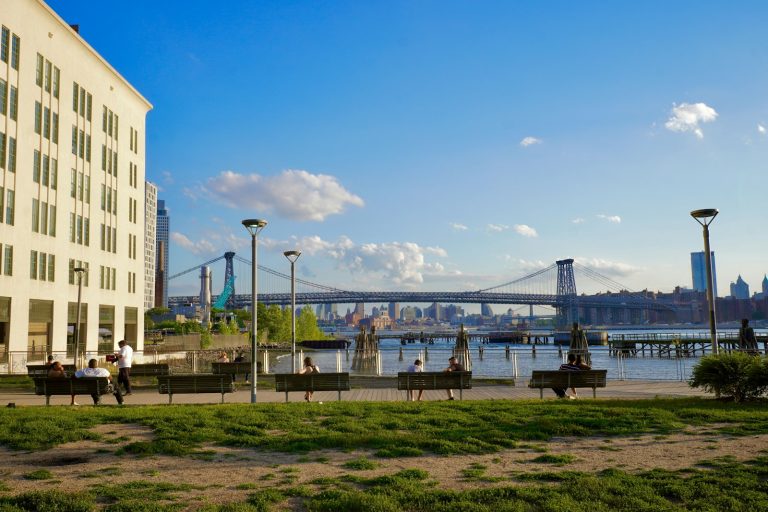
Williamsburg is the borough’s nightlife and restaurant center, with waterfront hotels and rooftop bars facing Manhattan. Greenpoint, next door, is calmer and still has a strong Polish community. Bushwick, further east, is known for street art, music venues and warehouse studios. Our Williamsburg guide covers the neighborhood in detail.
The waterfront: DUMBO and Brooklyn Heights
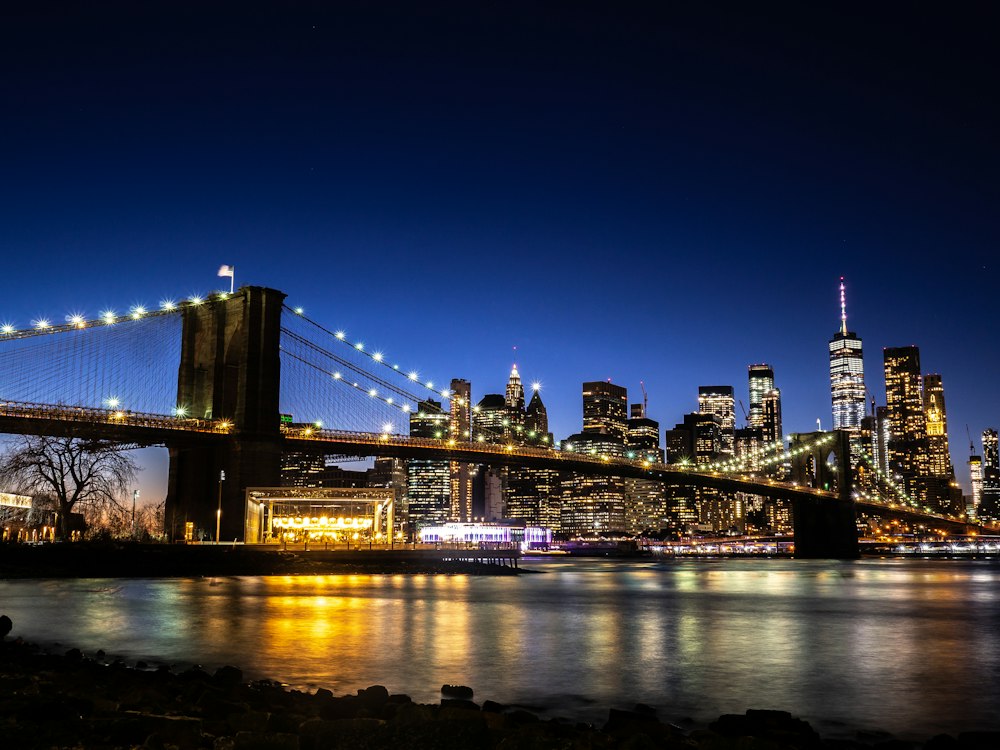
DUMBO is a small grid of cobblestone streets between the Brooklyn and Manhattan bridges, now full of tech offices and shops. Read our DUMBO guide for what to see. Brooklyn Heights, just up the hill, is the oldest neighborhood in the borough, with the Promenade looking across to Lower Manhattan.
Brownstone Brooklyn
Park Slope, Fort Greene, Cobble Hill, Carroll Gardens and Boerum Hill make up what people call brownstone Brooklyn: tree-lined streets, row houses, independent shops and some of the highest rents in the borough. Prospect Park anchors the area.
Central Brooklyn
Crown Heights, Bedford-Stuyvesant and Flatbush have deep Caribbean and African American roots. Nostrand Avenue and Flatbush Avenue are great for Caribbean food, and Bed-Stuy has some of the city’s most beautiful brownstone blocks.
South Brooklyn
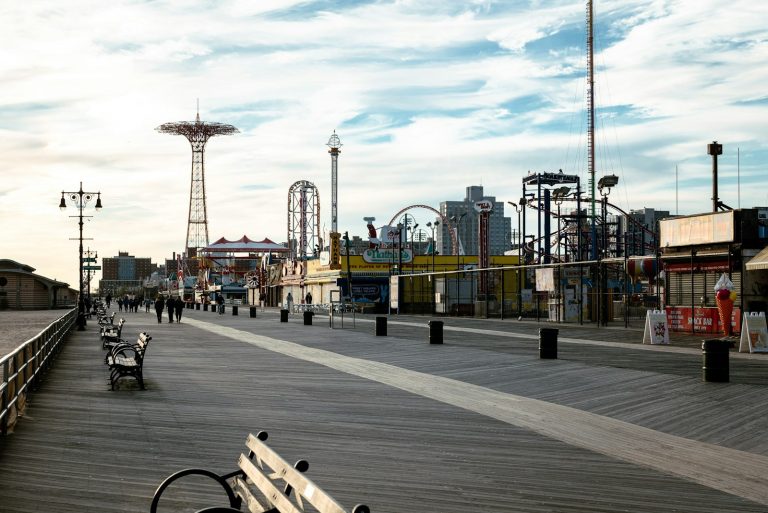
Bay Ridge, near the Verrazzano Bridge, has a long waterfront promenade. Bensonhurst and Gravesend have Italian roots and places like L&B Spumoni Gardens. Coney Island and Brighton Beach sit on the Atlantic Ocean, with the boardwalk connecting them.
Getting there
Most subway lines from Manhattan cross into Brooklyn within a few minutes. The G train is the only line that links north and central Brooklyn without passing through Manhattan. NYC Ferry runs along the East River waterfront.